
Ellucian Banner Automation and Job Scheduling for Higher Education
Ellucian Banner® runs the work a term can't go without: ISIR loads, population selections, aid packaging, and the letters and reports that follow. JAMS Scheduler runs those jobs on one schedule with the rest of campus IT, holds each step until the one before it succeeds, and alerts your team the moment one fails.
Automate the Banner Jobs Behind Every Term
How JAMS Scheduler Runs Ellucian Banner Jobs
JAMS Scheduler connects to Banner’s database and application layers and runs Banner jobs and BannerProcedures on Windows, Linux, and UNIX servers. Banner jobs share one schedule, one dependency chain, and one job history with your database, file transfer, and script jobs. A financial aid run can wait for a federal file download, process in Banner, and hand off to reporting without anyone watching the clock.
Kent State now moves a job chain from development to production in minutes. In its previous scheduler, building a chain took up to an hour, and then the same work again to stand it up in production. Kent State also gave its functional users read-only access, so the team no longer sends screenshots to get approvals.
See supported job types and setup on the Ellucian Banner integration page.
Enterprise System Integrations
JAMS natively connects with leading database platforms, cloud services, and legacy systems, acting as an orchestration layer for your enterprise ecosystem.





File Transfers in JAMS
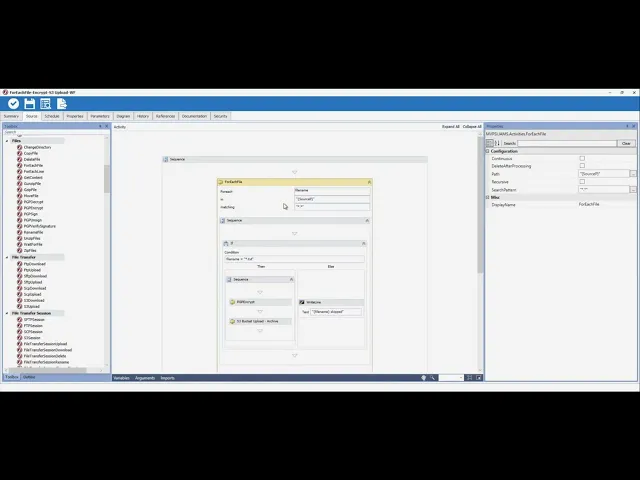
Automating file transfers is one of the most common IT automation use cases — and JAMS handles it natively. This tutorial walks through creating an file transfer job in JAMS, including connection setup, transfer configuration, and scheduling.






Why Colleges and Universities Run Banner on JAMS Scheduler
Kent State University runs about 25,000 job executions a week across eight campuses, with no failed or missed runs attributable to JAMS Scheduler since its June 2026 cutover.
The University of Mary Washington cut ISIR loading and aid packaging from 10 hours a day to 8 hours a week.
Support is available 24/7 from engineers in the United States, the United Kingdom, and Australia, with an average tenure of more than five years.